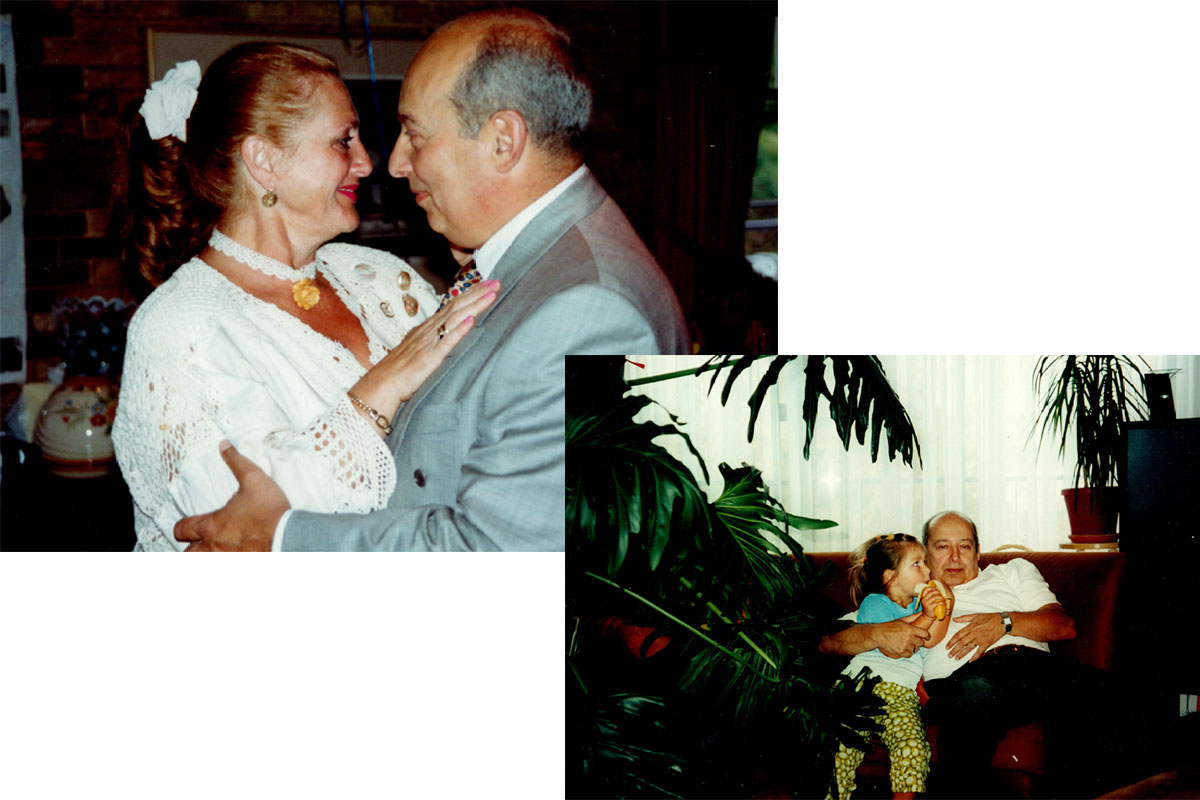
It was a Tuesday afternoon when my dad sat down with my mom, brother and me to tell us that my grandfather—a once brave, confident man who had been suffering from Alzheimer’s disease for the past eight years—had contracted COVID-19. In a very matter-of-fact manner, as if he’d been preparing for this moment, my dad let us know that our Dulia (a nickname my brother and I gave my grandfather when we were little) was expected to die by the following Monday.
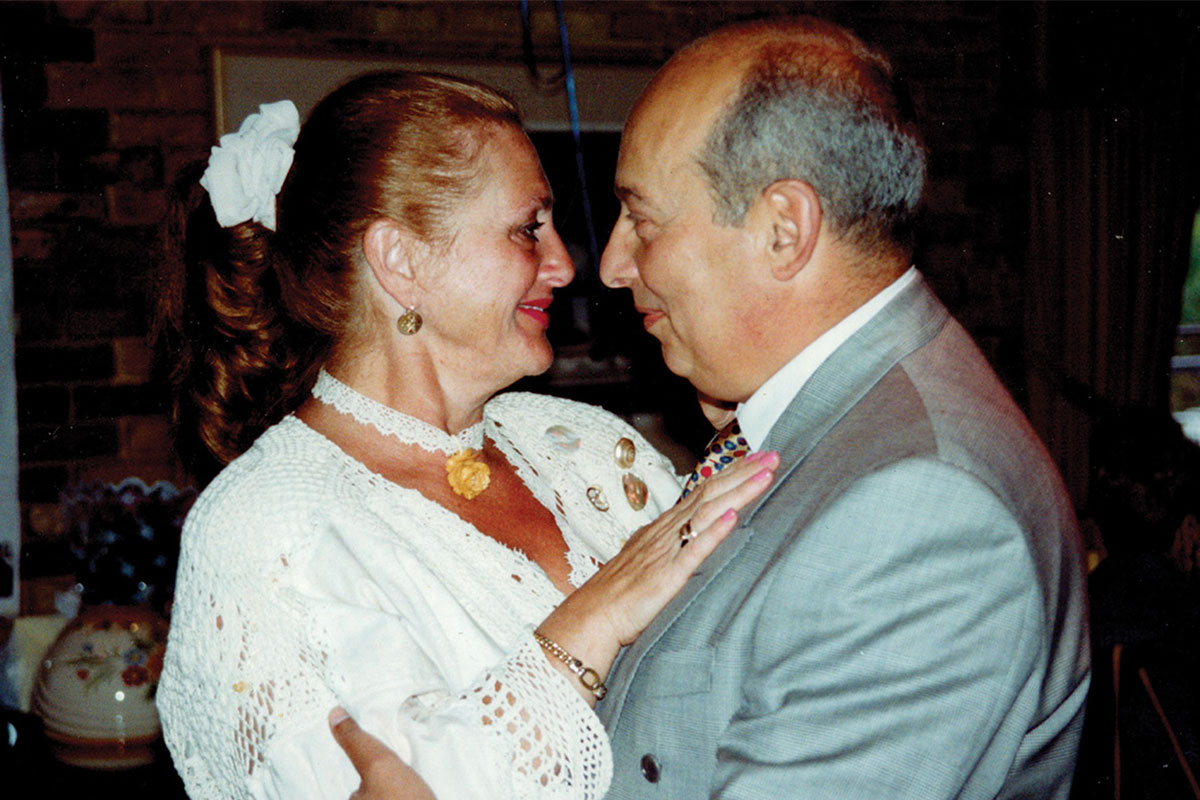
When those words fell from his lips I immediately thought about my favorite person, my grandmother, nicknamed Bulia. Since my grandpa moved into a rehabilitation center nearly a decade ago, Bulia dedicated her life to keeping him healthy. From getting her driver’s license reinstated at age 80 in order to visit him every day to micromanaging his attentive nurses, Dulia was her top priority, her day job, her purpose.
Yet when the coronavirus made its way to Massachusetts in March, my strong, Russian, go-getter grandma was told she had to stop visiting for his safety. And now, a month later, another sickness for which there is no cure had gotten to him and there was nothing she could do about it. None of us could. When Northern Virginia, like much of the country, issued stay-at-home orders, I decamped from my house in Arlington to my childhood home in Massachusetts, where I could be close to my family and, it turned out, help my Bulia through her grief.
I knew the statistics: By May, more than 90,000 people had died of the virus in the U.S. But, despite this knowledge, I didn’t realize the depth of power and uncertainty surrounding this invisible killer until we heard the facts directly from my grandpa’s doctors. “I have to be honest with you,” one said. “We don’t know how to help him, but we will make him as comfortable as we can.”
On April 27, just as the doctors predicted, my grandpa passed away. He was 86, had a preexisting health condition and couldn’t walk on his own when the virus made its way into his lungs. Simply put, his body was a magnet for this unexplainable sickness that creeps into the body like fog rolling over the sea on a summer morning—distant at first and then impossible to avoid.
We didn’t get to sit shiva after his death, a time where family and friends bring food to the home as a grieving ritual per Jewish tradition. We weren’t there by his bedside to say goodbye. We didn’t get to hug my grandmother the second she found out the man she had been devoted to for 59 years was gone.
Yet, in those final days before he passed, my family and I had time to come to terms with death, a rarity for most. Each night, the five of us sat around the kitchen table (with Bulia on FaceTime), looking at photos of pre-Alzheimer’s Dulia—the guy who had the guts to propose to a woman after knowing her for just two days. For the first time in my life, my dad, who rarely opens up about his past, was telling stories about his childhood in Moscow and Dulia’s ability to gain the respect of diplomatic leaders with ease.
There are very few things we can control in this life—Alzheimer’s disease, the toll of the coronavirus, heartbreak from loss—but I’ve learned how we approach each situation is always a choice. As seven family members stood under a cherry blossom tree on a sunny day in New England for a pseudo funeral—the only gathering that was allowed with safety restrictions in place—I chose to see the good in that moment: the pink petals flowing through the wind as the rabbi said my grandfather’s name, the blue jays chirping almost in sync with the sound of my grandma’s tears. These are things I don’t think I would have noticed months ago. The coronavirus took my grandfather and I saw firsthand how this disease is wreaking havoc on families.
But, that day, at an intimate funeral I wouldn’t have previously pictured for my Dulia, I felt lucky that I was able to clasp my grandma’s latex-covered hand and see her bright blue eyes above a face mask. None of it was normal, but as my grandpa was laid to rest I could feel Bulia’s body let out a deep sigh, as if she had been holding it in for years. At that moment, I knew we’d all be OK.
This post originally appeared in our June/July 2020 print issue. For more personal essays, subscribe to our weekly newsletters.