Chantilly Native Evan Royster Joins Redskins’ Official Roster
Posted by Lorin Drinkard / Wednesday, November 23rd, 2011
Wednesday, November 23, 2011

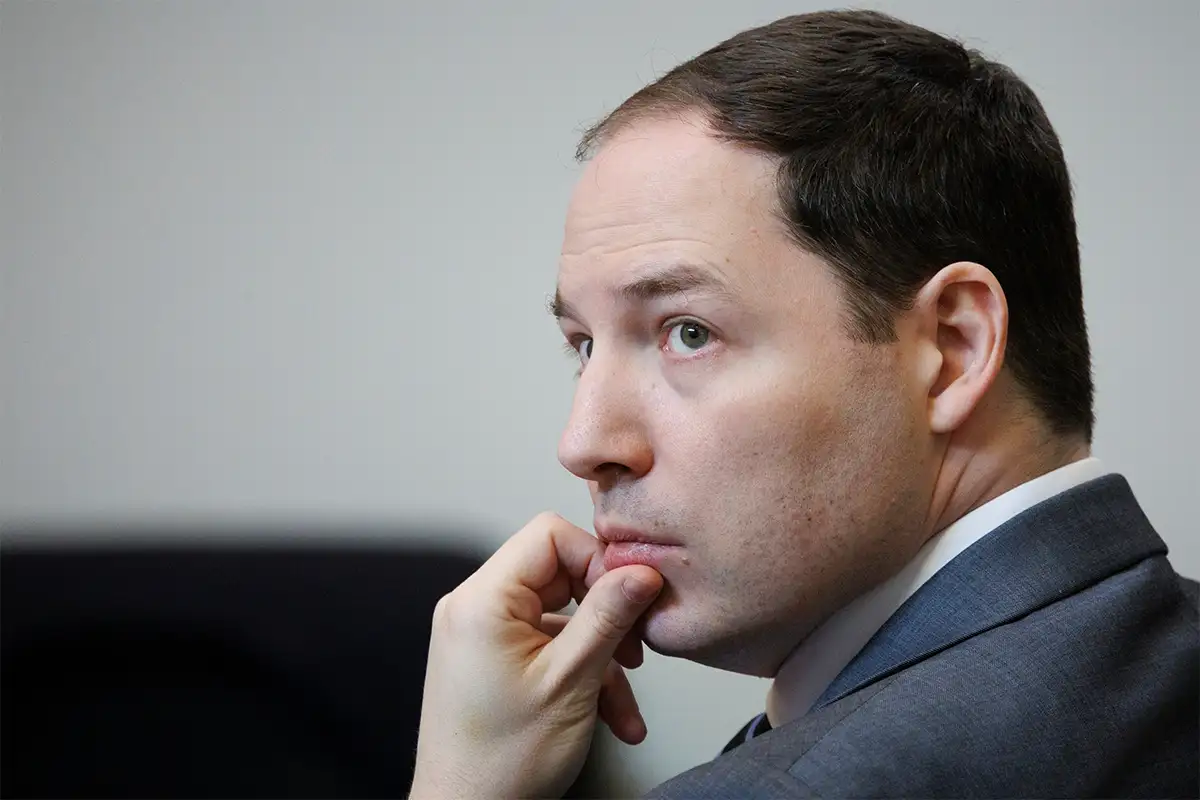
Redskins' newest running back. /Photo courtesy of: Redskins
Redskins fans, here’s the latest scoop: there’s a new running back in town.
Chantilly born-and-raised Evan Royster was added to the Washington Redskins official active roster yesterday afternoon. After a stellar career at Penn State (school’s all-time leading rusher, All-Big Ten first and second-team honors, started in all 13 games senior year), Royster joined the Redskins practice team after being drafted in the sixth round (#177 overall) earlier this year.
The former Westfield High School stand-out now has the opportunity to show off his running chops as the 53rd man on the Burgundy and Gold squad. Call it a Thanksgiving Day blessing, or an early birthday present (Royster turns 24 on Nov. 26th), but we’re calling it a good thing.
–Lorin Drinkard
Andrea Bocelli Kicks Off U.S. Tour
Posted by Lorin Drinkard / Tuesday, November 22nd, 2011
Tuesday, November 22, 2011

World-renowned Italian tenor says 'buona sera' to D.C. / Photo courtesy of Monumental Sports & Entertainment.
If third time’s a charm, then beloved Italian tenor Andrea Bocelli is completely charmed. And charming. With trip #3 (in a row) to the U.S. just around the corner, we caught up with the most beautiful voice in the world and talked about visiting D.C., his recent Dancing With the Stars cameo, soon-to-be-established charity foundation and more.
[As told through translation]
Lorin Drinkard: We’re so looking forward to your upcoming visit to Washington, D.C. As your third tour in the United States, do you have surprises up your sleeves for the audience? What are some of the musical selections you’ll be performing?
Andrea Bocelli: “My aim is to transmit throughout the world that eternally beautiful repertoire which is traditional of an Italian tenor, ranging from operatic arias to great ballads and Neapolitan melodies as well as a few other pieces chosen among the ones that people have come to associate with my voice.”
Drinkard: Conductor Eugene Kohn, Ana Maria Martinez and Heather Headley will also be with you tour. Tell me a little about working with Mr. Kohn. What aspects of his conducting do you most appreciate? And performing with Martinez and Headley?
Bocelli: “Eugene is a great musician as well as being a man who lives for music, almost more than me and it is always a wonderful thing to work with people who still have a childish enthusiasm towards the things they do.
Heather and Ana are two friends who have been sharing the scene with me for several years. Let’s say it will be like a special party among friends. What more can I ask for?”
Drinkard: Over the years, you’ve starred and performed in numerous operas. Do you have a favorite character or role? What about it appeals most to you?
Bocelli: “There are plenty of characters that I love in operas and it would be truly impossible to choose one, also because a lot depends on the moment, on my mood … I can say that, when I confronted the character of Cavaradossi I could truly identify with his personality as a man, as a lover, as a citizen, very attentive to the political events of his era.”
Drinkard: And you recently performed on the hit show “Dancing With the Stars” along with Chris Botti. How did this musical collaboration come about?
Bocelli: “David Foster introduced us and we quickly took a liking to one another. Chris is extremely talented and transmits vital energy. Music has the power to unite people and so we immediately felt a strong desire to make music together.”
Drinkard: In just a few days, you’re newest CD/DVD release, “One Night in Central Park” will be available in stores. Tell me a little about that concert in New York. What about it makes it so unique and special? What can fans look forward to on this CD/DVD?
Bocelli: “I experienced a huge emotion, a huge sense of responsibility with regards to recording of the CD and DVD. I thought of the people that were eagerly awaiting me, defying the rain and the cold wind, I thought of my children, my mother and my partner, all of those whose heart was beating fast at the idea of seeing me appear in that spectacular framework. I thought of everything and nothing at the same time, because when the moment arrived, all thoughts took refuge in that protected area of my mind to make space for concentration.”
Drinkard: Congratulations, Signore Bocelli, on making it into the “Guinness Book of World Records” for the highest-selling solo classical album of all time. As one of the most accomplished tenors in the world, who inspires you musically? Any other tenors or classical performers you admire?
Bocelli: “This is one of the few questions that does not generate any doubts whatsoever: I have said and written time and time again that Franco Corelli was my true model, my inspirer, always, when I heard him for the very first time. It was love at first sight and this bond has never broken and has never suffered a recession.
As far as more recent times are concerned, I cannot afford not to mention the Maestro Pavarotti who deserves a special place in the history of music of our century and it was an unforgettable privilege for me to be at his side.”
Drinkard: In addition to classical music, what other types of music interests you?
Bocelli: “I am open to listening to all kinds of music: we can trace marvellous pages from all kinds of music, but my preference is for the opera and when I get out of my armchair to put on a CD, most of the times my choice is for opera.”
Drinkard: Having sold over 65 million records to date, what about your music makes it enjoyable and relevant to fans all over the world, from all different walks of life?
Bocelli: “The nature of music is mysterious and so much so that it generates strong emotions within us. It moves along passages that reach the most intimate areas of our psyche without being tried by prejudices or influences of any kind. This special condition attributes special properties to music that even I, in a certain sense, without even troubling the supernatural, do not hesitate in defining as a mystical experience.”
Drinkard: What do you think are contributing factors to your success in the musical world?
Bocelli: “I don’t believe that key moments exist: instead there is passion, determination, predisposition, the receptivity of the audience. What counts is to be the right man at the right time.”
Drinkard: You are quoted as saying, “I don’t think one decides to become a singer, It is decided for you by the reactions of the people around you.” Who were the people around you that led to the beginning of your journey as a singer?
Bocelli: “It was an intuition of my mother who, when I was a whimsical child, only managed to make me eat by putting on background music that she used as a ‘sedative.’ She made me listen to the tenor Franco Corelli, whose voice I fell in love with as soon as I heard it. From then on music became a constant and vital element in my life. It was a real flash of lightning, so much so that at nine years of age I already knew quite a number of songs.”
Drinkard: You began your career in Italy. Do you have a favorite performance venue there?
Bocelli: “Italy is where the opera was born and, among other things, it is my real passion with traditional theatres in which singing still represents an extraordinary experience. Small theatres in which you can feel the audience breathing almost next to you and with you, where your voice is offered in a simple and natural manner, without the need for amplification – these are the places in which I am always happy to sing.”
Drinkard: You are also quoted as saying there is “no connection” between your blindness and your singing ability. In what ways do you think being blind has impacted your life? As far as your musical career?
Bocelli: “It is not the absence of defects that determines the success of an important singer, but the presence of huge values that are nothing more than heaven-sent gifts.”
Drinkard: Last year you teamed up to sing with Mary J. Blige at the Grammy Awards to raise money for Haiti relief. Are there other charitable organizations that are near and dear to your heart?
Bocelli: “I warmly and actively accepted the nomination as Honorary President of the ARPA Foundation of Professor Mosca some years ago and I have also been supporting the NPH ITALIA Francesco Rava Foundation , operating in Haiti, for some time.
Furthermore, I must say that the birth of the Andrea Bocelli Foundation will soon be announced.”
Drinkard: Signore Bocelli, you’ve said you’ve always “loved speed and adventure” and that you’re “a man of action.” When you’re not performing or recording music, what types of activities do you most enjoy doing?
Bocelli: “One of my greatest passion is horse riding. I have always been fascinated by horses, by their strength, their agility, their beauty, all made available to man. Riding is also a challenge, a courageous act, even more so the younger and more highly strung the animal is … As a child I couldn’t resist the temptation of riding a difficult horse, of conquering his resistance … It was really thrilling. Later on horses helped me to learn to love nature, the peace of the countryside, the voice of the woods and the rivers.
As my career got underway I had to abandon my horse riding activities but the passion remained, to the point that just recently I could not resist buying another horse. Once again I chose another young black stallion, only three years old; now we have to get to know each other, but our friendship has got off to a good start. I feel that I have made a new friend who will be a good companion for many years.”
Bocelli, with conductor Eugene Kohn, will be performing with world-renowned soprano Ana Maria Martinez and Tony Award-winner Heather Headley at the Verizon Center in D.C. on December 2nd at 8 pm. Tickets are $78 – $378 and are available for purchase here.
–Lorin Drinkard
NoVA Native’s ‘Wicked’ Story of Making it on Broadway
Posted by Rebekah Lowe / Monday, July 18th, 2011

Luis Figueroa (Photography Courtesy of Luis Figueroa)
By Clara Ritger
Over lunch at Old Ebbitt Grill, mouth agape and scribbling furiously in my notebook, Luis Figueroa told me the story of how he got to be a cast member in “Wicked.”
“I grew up in Falls Church,” he says. “My first year out of high school, I wasn’t sure what I wanted to do. I had some interest in theatre, but no real knowledge of the industry.”
Shocked that he hadn’t labored in a dance studio for years with the hopes of becoming a Broadway star, I wondered how he could possibly get from Falls Church to New York City.
“I fell in love with NYC when I was visiting friends that I had met in D.C.,” Figueroa says. He attended Northern Virginia Community College and after a year decided to audition for the American Musical and Dramatic Academy (AMDA). “I had never had any formal dance training, but I knew I wanted to get to New York.”
As many theatre-hopefuls know, AMDA students don’t get there by chance. “Somehow I got in,” he says. “I started wondering, what am I doing? How am I going to compete with this? Being in theatre means competing for a job.” Figueroa would attend classes from 9 a.m. to 5 p.m., but his work each day was only beginning. “I worked late in the practice studios. AMDA is a program that you get out of it what you put into it. I had a hunger [for the stage] and if you want it, you can make it happen.”
Getting to New York meant taking chances. Figueroa had a stable job with a company that was itching to put him on contract. But choosing to leave Northern Virginia meant that he would give it his all. By the summer of 2002, Figueroa landed his first musical: “42nd Street.”
“It was the first time I wasn’t working with just AMDA kids,” he says. The show performed in Moscow. “It was six of the most incredible months of my life. So much theatre technique derived from Moscow, and it was amazing to see the city and explore it.”
Figueroa’s stay was cut short. A nearby theatre had been taken hostage by rebels who didn’t appreciate the show’s message, and both Moscow audiences and New York producers felt nervous for the safety of “42nd Street.” He remembers talking to his mom about whether or not he should leave. “Several cast members had dropped out,” Figueroa says. “But my mom told me, ‘You take your chances no matter what big city you’re in.’”
Though he stayed on with the show, it closed early and by the beginning of 2003 he was back in the states. Luck was once again on his side. “Auditions for the NYC production of ‘42nd Street’ came up and I got in. So I did that until it closed in 2005.”
Being a dancer wasn’t enough for Figueroa. By the time “42nd Street” closed he was taking acting classes “to bridge the gap.” That’s how he found “Wicked.”
“‘Wicked’ is one of the toughest auditions out there because you need to master the style and the choreography,” he says. But for the AMDA student, getting in was never a problem.
Figueroa says his favorite “Wicked” song is “Thank Goodness.” “It speaks to me. In some sense you get everything, but it’s not necessarily what you need to get back to an enlightened place.” Perhaps that’s why he left the tour to take his chances in Los Angeles.
“Casting directors were telling me that my career was geared toward theatre and I had nothing to show for the camera,” he says. But it wasn’t in Figueroa to take no for an answer. “I finally got someone to look at me. That’s when I started booking commercials.”
L.A. was a struggle for Figueroa, especially with the writer’s strike in 2007. “In L.A., everyone wants to be an actor. I didn’t want to be in limbo waiting for my shot. I had fear. There were times that I felt like I just wasn’t being me.” To pay the bills, he started working at a high-end tanning salon. Then, one client, Jorge, saved him.
“In October 2009 Jorge asked me about my Broadway experience. He was going on a trip to New York and wanted to know what to see. When he came back, he said, ‘If you can do that, then why aren’t you doing it?’ He told me that I needed to share my talent with the world.”
Soon after, Figueroa called his agent to start scheduling auditions. “I was booked as a guest star for ‘Medium’ and I really liked that work. But I started to miss the lifestyle of theatre. There’s a family to theatre and you really feel like you belong and you’re a part of something bigger.”
So he flew out to New York, twice, to audition. “To be living in a single moment again was exhilarating,” he says. He auditioned for “West Side Story” and “Wicked.” “In theatre, it takes one phone call to change your life completely,” he says. So Figueroa waited anxiously, but after a while thought that perhaps his days on stage were over.
Figueroa remembers everything about the day his life changed. “I remember getting the phone call from my agent on a Sunday. He told me that I got into ‘Wicked’…and ‘West Side Story.’ As the story goes, I chose ‘Wicked.’” So I asked him what was so special about “Wicked” that he had to do it twice.

Amanda Jane Cooper & Dee Roscioli as Glinda & Elphaba in Wicked (Photography Courtesy of Joan Marcus)
“I haven’t lost my love for the show, the material, and the story that’s being told,” he says. The story of Wicked is a story of family, but for Figueroa it’s the story of two families: those he rejoined on stage, and those he reunited with in Northern Virginia. “I knew I had the opportunity to be in D.C. for ten weeks. As an adult, you don’t often get the chance to come and be with your family for that length of time. I wanted that chance.”
Theatre is also a place where Figueroa feels he can make a difference. “I want to be a part of something that affects someone in the same way that I am affected by a TV show or movie,” he says. “During Defying Gravity I get the opportunity to glance into the audience and see the reaction from adults, kids, grandparents… it’s nice to be a part of something that so clearly on their faces matters.”
Figueroa’s thrilled to be back on stage, especially with the show. “Wicked hasn’t lost its edge or its caliber. I left in 2007 but now I’m back and still thrilled by the show. It broke box office records at the Kennedy Center. That says something about what it has to offer audiences.”
Figueroa’s theatre experience is also the story of his coming into adulthood. “You get so lost in the bullshit and things that really at the end of the day don’t matter. Once you get close to 30 it clicks. I’m trying to be in the moment and accept people for who they are, and accept me for who I am.”
The stage houses insecurity, doubt, and fear for those performing on it. But after being in and around the industry for so long, Figueroa knows that actors need more than an audience’s applause to validate their performance. “We don’t have to convince people we’re good enough,” he says. “The power is within us. We have to convince ourselves.”
So what’s next for Figueroa? “I’m open to anything,” he says. “I don’t need labels anymore. I can appreciate being where I am. If I’m too busy making other plans, life goes by me and I miss it.”
Thank Goodness.
“Wicked” is on stage at the Kennedy Center through August 21. Tickets cost $37-$250 and can be purchased online www.kennedy-center.org or by phone 1-800-444-1324.
Posted by Eunice / Wednesday, May 25th, 2011
Congress takes a closer look at how money men work with you.
By Amanda Millward
[Editor's Note: This article has been updated since it ran in the April 2011 issue.]
After the demise of the financial sector—stock market crash, Enron and Worldcom scandals, housing market collapse, Madoff Ponzi Scheme, ETC.—it’s no wonder that the public is skeptical about entrusting their money to industry representatives. Many don’t understand the different roles financial professionals can play, or the amount of education they should have. It’s important for consumers to know as much as possible about their financial planners and how they work. And while the average person does a bit of homework, congress is working to ensure anyone who dubs him/herself as a financial pro is putting the consumers’ best interests first.
They were watched, but were they watched close enough?
One can surmise the fear that ripped through the minds of many during the fall of 2008 closely mirrored the pandemic anxiety people had during fall of 1929 when the stock market crashed, throwing the United States into the worst financial depression in the nation’s history. And, today, while the nation continues to struggle through the infancy stages of recession recovery, those who played a large part in the economic downfall are just learning of the transformation their industry may soon undergo.
From the Great Depression came a structure of financial regulations that are still in play today—the Securities Exchange Act of 1934 and the Investment Advisers Act of 1940. The 1934 Act created the Securities and Exchange Commission (SEC) as the governing body of the financial sector, as well as Self Regulatory Organizations (SROs), to oversee and regulate financial broker-dealers and brokers—requiring them to follow a suitability standard of care. The 1940 Act set the standard for investment advisers to follow the fiduciary standard of care.
For the longest time, brokers and investment advisers followed two different codes of services: fiduciary and suitability, with the fiduciary standard of care being the highest level of care a financial planner can give to the consumer. Both standards mandate the planner disclose information to the consumer, with fiduciary standards requiring planners to disclose any conflicts of interests; mention if there is a product that would suit the consumer better than that which the consumer already has (even if the planner does not offer that product); and identify any risk that is involved with the product. The suitability standard states that the planner, usually brokers, do NOT have to disclose everything to the consumer, only offer the consumer enough suitable information—leaving room for conflict of interest.
There are, however, a few key differences in the way investment advisers and brokers do business. Investment advisers do just what their title says they do: They give advice on clients’ investments; while brokers generally sell a product. Investment advisers typically get paid by the advice they give, and brokers by the products they sell—whether it’s by the product, the number of which the broker sold, or the size of the product.
Unfortunately, the 1934 and 1940 Acts did not adjust as the financial world transformed, and different careers, such as financial planners, emerged as did different ways for financial professionals to do business. And in the late 1990s and early 2000s, the market saw credit default swaps and the use of synthetic derivatives.
As Bryan Beatty, financial planner and partner of Egan, Berger & Weiner, LLC, in Vienna, says, “They haven’t done any real work on the regulations to sort of control any behavior to [the] client adviser since the 1940 Act. [The Dodd-Frank Wall Street Reform and Consumer Protection Act] is going to change the industry.”
While the SEC and individual states regulate investment advisers, broker-dealers and brokers, The Financial Industry Regulatory Authority (FINRA) helps by regulating brokers-dealers and brokers. Yet, with all of these regulators it is no surprise there is confusion. And it is no wonder that schemes as big as those of Enron and WorldCom went unnoticed for years. With the nation in another financial crisis, closely following the Great Depression, it is no wonder that Congress had to move quickly on the Dodd-Frank Wall Street Reform and Consumer Protection Act in 2010, and get the financial industry up to 21st-century standards.
So what is the Dodd-Frank Act, and how will it change the financial industry?
There are several causes for the drafting and passing of the Dodd-Frank Act. However, Bernie Madoff’s Ponzi Scheme was considered an extreme case of regulation oversight. Madoff allegedly had his own auditor instead of having a third party audit his books. Madoff was not examined, and he may have had a lot of power in the SROs. Barry Glassman, President of Glassman Wealth Services, LLC, in McLean, remarks, “Madoff didn’t just con illiterate investors; he conned everybody. The normal safeguard just didn’t accomplish what it was supposed to.”
Within the Dodd-Frank Act, studies were commissioned to try and get a better understanding of the financial world as a whole. In particular, two major studies were conducted in order to understand the business practices: Section 913, dealt with the SEC’s study of whether to extend the fiduciary standard of care to broker-dealers who provide retail investment advice; and Section 914, a dealt with enhancing investment advisor examinations of investment advisers, broker-dealers.
What the studies found was that having the two different standards of care were confusing to the consumer that all financial planners should follow the highest standard which is the fiduciary standard of care.
Many financial planners are in favor of the recommendations, and most planners believe brokers and investment advisers should follow a fiduciary standard of care and should be examined more regularly. “There’s too much muddled confusion over [whom] the adviser represents and what the risks are,” opines Glassman. He adds, “As a fiduciary, it is easier for me to explain to clients who I represent.”
While most financial planners are agreeable to the switch to a fiduciary standard of care, the Section 913 study also made the recommendation that there should be one uniform SRO to regulate investment advisers, brokers and broker-dealers. (It is rumored that FINRA has asked to be the SRO; however, a representative of FINRA was unable to comment at press time.)
Most investment advisers do not want to be regulated under FINRA. They believe that FINRA is too powerful governing brokers and broker-dealers, and adding their control to investment advisers would make FINRA the overall regulator of the financial sector. Most investment advisers want to stay under the control of the SEC.
Similarly, there are financial planners who do not want the new recommendations to take effect, period. They think that the system that they have been working under is just fine and that the recommendations would have some negative effects on both brokers and consumers.
David Wexler, founding partner of Greenberg, Wexler & Eig, LLC, in Bethesda, Md., says, “From the people who are in the business of helping people to identify risks and securing insurance products to mitigate that risk I don’t think [they] necessarily need more regulations and need to be held to a fiduciary compliance standard when I think the broker-dealer standard is high enough and it seems to work.”
Beatty, who is for uniform fiduciary, explains that many financial professionals have a lot to lose if the system is changed. He says, “There are a lot of people making a lot of money with the way the system currently is. They don’t want that changed.”
These planners believe that there won’t be as many products as there are now for consumers to choose from, that consumers will have to pay more for advice and product selection, and that it will affect the way brokers sell. The financial planners that believe the system is fine the way it is claim that with any type of work there will always be a few bad apples trying to cut corners to increase revenue, but that the system works to stop these crooked people. “From my little piece of the world we’re regulated enough and the people who really do create transgressions are fairly easily caught and are fairly easily dealt with,” says Wexler.
However, there are financial planners on both sides of the spectrum that believe, based on the 913 and 914 studies along with the other hundreds of studies the Dodd-Frank Act commissioned, that the financial world has a long wait ahead before a decision will be made about a uniform standard of care or uniform SRO. SEC commissioners have released a statement calling for more studies before the SEC can make a decision, and that the conclusions of the studies are nothing but recommendations.
Beatty warns, “That change is coming voluntarily or involuntarily. I prefer voluntarily because involuntarily comes with consequences with getting involved in a way that hurts the public. I hope 2008 is a great lesson. I hope we can learn from 2008.”
Why You, the Consumer, Should Care
Unfortunately, it is hard to recognize fraud, but there are a few key things to keep in mind. First, do not write a check directly to your financial planner. Instead, make sure it goes to a public custodian, i.e. Fidelity. Always make sure you are receiving financial statements from your planner and the custodian, and always compare the two statements. Kevin Keller, CEO of the Certified Financial Planner Board of Standards Inc. (CFP Board), advises the public, when looking for a financial professional, to look for the CFP Board certification and seal. “Our mission is to benefit the public, and we do that by granting our CFP certification and upholding the recognized symbol of excellence.” The CFP Board of Standards, Inc. is a 501(c)(3) organization that upholds the standard of conduct for financial planners. Any financial professional that is registered with the CFP Board must follow the CFP certification process of education, must practice for a minimum of three years, are required to take exanimations, and all certificants must commit to the highest standard of care when working with consumers. It is one of the highest certifications a financial professional can hold.
The CFP Board has produced two documents, “10 Questions to Ask When Choosing a Financial Planner” and “CFP Board’s Consumer Guide to Financial Self-Defense,” to help consumers understand and protect their assets when it comes to investing money.
Consumers have the toughest job of all. It is very important for the general public and consumers to be aware of the studies that have come out of the Dodd-Frank Wall Street Reform and Consumer Protection Act of 2010 because these studies have the potential to change how investment advisers, brokers and broker-dealers handle accounts. The study on investment advisers and broker-dealers (as required by Section 913 of the Dodd-Frank Act) recommends that both should follow the fiduciary standard of care and put the client’s best interest before the firm’s best interest. This is a very important step toward giving consumers the best services possible.
When it comes to choosing either an investment adviser or broker to handle financial needs, it depends on what the consumer seeks. The best advice is to do some research on the companies, ask questions about the companies’ services and make the best choice for your needs. Kenneth Robinson, senior planner for the Monitor Group Inc., in McLean, suggests that consumers know how their advisers are getting paid. He says, “It’s critical to understand how a financial adviser is compensated. What is their business model? How do they make money? Understand that there a number of different ways that financial advisers are compensated and that can present conflicts of interest.”
Glassman advises, “I would suggest to people to look for advisers who are like them. Personality, relationship, is really important. It is critical that the investor feel they can bring up concerns in good times and bad.”
This financial world is very difficult to understand, and the recent recommendations do not make it any easier to understand. The studies of the Dodd-Frank Act did not set any new regulations, only recommendations. The SEC and Congress still have a lot to discuss, and the consumer should not be taking this lightly. “[Consumers should] stay on top of it and read as much as they can on the topic and what is happening with what the proposed rules coming out of the Dodd-Frank studies,” suggests Robinson. “Consumers should be worried if nothing comes from the studies and no real action is taken.”
In a study that was commissioned by CFP Board, Consumer Federation of America, AARP and other consumer groups, most Americans are confused about which financial professionals must follow a fiduciary standard of care. It also states that about 91 percent believe that financial professionals follow the same standard of care. It is imperative that the consumer understand what is going on with Study 913 and Study 914, understand how their financial planner is getting paid, and understand the mandates placed on financial professionals through fiduciary and suitability standards of care.
For consumers, it is important that they can trust the financial planner with their assets. The CFP Board offers a listing on their website at www.cfp.net—also see the top financial planners within this issue—and all CFP members have adopted a fiduciary standard of care.
“People in our industry should be held to the high and consistent standard; and if we could do that, the general public will benefit from that,” says Robinson.
Red Flags:
WE’VE KNOWN HIM FOREVER.
Always do your homework. Do research on the investor and always ask questions.
JUST SIGN HERE. I’LL TAKE CARE OF THE REST.
Never leave any blanks. Read the document and complete all necessary paperwork. Always ask for copies of the paperwork.
THIS IS JUST FOR MY SPECIAL CLIENTS.
There are no special deals. Ask for it in writing or if they carry professional liability insurance.
I’LL SEND YOU ALL OF THE INVESTMENT REPORTS.
Make sure you receive statements from an independent third-party source., i.e. Charles Schwab, etc.
MAKE THE CHECK PAYABLE TO ME.
Never make a check payable to the adviser and never leave the payee line blank.
I KNOW IT’S A DIFFICULT TIME, BUT YOU NEED ME TO DECIDE.
Be suspicious of pressure tactics during a major life change. Find someone you trust to help you.
THIS ONE’S A NO-BRAINER. YOU CAN’T LOSE.
There is no such thing as a free lunch. If your advisor tells you otherwise, take your business elsewhere.
THIS OFFER IS GOOD FOR TODAY ONLY.
Do not be pressured with persuasion tactics. Give yourself time to consider the investment before deciding.
I CAN REPLACE THAT WITH SOMETHING BETTER.
Ask yourself “better for whom?” or what your planner is getting out of the deal.
IT’S VERY COMPLICATED. NO NEED TO BOTHER YOU WITH ALL THE DETAILS.
Ask lots of questions. Do not let your planner off the hook. Ask for second opinions.
Source: Certified Financial Planner Board of Standards, Inc.
(April 2011)
Paralyzed Veterans Get Their Day on the Golf Course
Posted by Eunice / Tuesday, May 24th, 2011
Veterans and leaders from businesses, government and the armed services took to the fairways at Belle Haven Country Club May 23for the fourth annual Paralyzed Veterans Golf Open. Participants had the opportunity to try out adaptive golf carts that can lift players to a vertical “standing” position so they can swing freely even if they are paralyzed.
The event raised more than $300,000 for Paralyzed Veterans of America’s Vocational Rehabilitation Services Program, which provides veterans with spinal cord injury with the services and skills they need to secure good jobs and careers. Since 2008, the tournament has raised more than $1.2 million for Paralyzed Veterans’ vocational rehabilitation program.
For more information on the organization, visit www.pva.org.


Photo courtesy / Kacey P. Crawford, Associate Director, Paralyzed Veterans of America
Posted by Eunice / Tuesday, April 5th, 2011
By Natalie Kaar
Earlier this year, Dan Jensen, manager at Chammps in Reston, was a three-time champ on Jeopardy! Should anyone else wish to follow in his trivia-filled footsteps, we asked the smarty pants to suggest a few books to add to our Nooks.
“The Great American Bathroom Book, Volume 1: Single-Sitting Summaries of All Time Great Books” Jensen says this book is full of useful facts.
“Shakespeare for Dummies” A lot of the show’s answers/questions involve Shakespeare; to Jensen’s surprise, not one was included during his four appearances.
“Complete Idiot’s Guide to American Presidents” Practically a must-read if prepping for the show.
“Atlas of World History” This book helped Jensen rule the French Revolution category during his first appearance.
“Prisoner of Trebekistan: A Decade in Jeopardy!” Jensen says this memoir of former contestant Bob Harris includes a lot of insight.
Books weren’t the only thing that helped Jensen win big on Jeopardy (over $70,000). He also turned to the popular board game Trivial Pursuit and the Jeopardy computer game. And, interestingly enough, Jensen says some of the questions he had studied while playing the Jeopardy computer game were actually included on the show.
Other fun facts discovered in talking with Dan: Host Alex Trebek is a huge hockey fan, talked a lot about hockey with Jensen, no doubt due to Jensen’s sports bar ties (Note to self: Question Trebek about the Caps). Jensen shot all four shows in two days, wanted to celebrate the first night after winning twice, but had to be up at 6 a.m. to begin taping again the next day. (And we thought being fast with the buzzer was stressful enough!)
(April 2011)
Posted by Eunice / Tuesday, March 22nd, 2011

"Annie" (Courtesy of Julie Hart)
Julie Hart’s love of animals and art have come together in a way that benefits the greater community. Hart’s portraits of animals (both on canvas and in postcard format) are on display at A Show of Hands in Alexandria and the Workhouse Arts Center in Lorton, and all proceeds go to local animal rescues.
Julie Hart Designs, LLC; www.juliehartdesigns.com; Julie@juliehartdesigns.com; 703-254-6582
Posted by Eunice / Monday, March 21st, 2011
Facility Maintenance’s future
By Colleen Sheehy Orme
Chad MacDonald, CEO of Dulles-based ServiceForce USA, a leader in facility maintenance services, is once again championing his industry.
A business prodigy who began his first facility maintenance business at the age of 18, he continues to possess insight that keeps him ahead of the competition. A “thought leader,” MacDonald is known for continually creating and developing the next generation of service and supply chain technologies and business models to create and sustain his company’s position as the preferred provider to many of the Fortune 500 corporations in North America.
With a 97-percent customer retention rate, ServiceForce USA is a testimony to understanding its own industry’s wants and needs. Listed as one of Washington Business Journal’s 50 Fastest Growing Companies, ServiceForce employs more than 1,100 employees and a vendor network of 8,000-plus, generating tens of millions in annual revenues.
With his impressive 26-year track record of building both public and private facility service, distribution and supply chain technology companies, what innovative concept could MacDonald be bringing to the facility maintenance industry now? He has leveraged $5 million of his own capital, and years of institutional knowledge, to transform this typically manual labor-driven industry toward a remarkable technological marriage.
Who would think that cleaning toilets, mopping floors, changing light bulbs and replacing filters could benefit greatly from sophisticated technology?
MacDonald, of course. “We took our lessons learned from years of managing a very transaction-intensive business and built a very robust service management and procurement platform.”
Hence, MacDonald developed the proprietary Connected-Services Technology (CST) Platform—incredibly sophisticated, yet affordable, easy-to-use software that mobilizes the next generation of integrated facility management services. The optimal word being integrated. The software allows their customers to connect and procure all service providers, product suppliers and managers with real-time business intelligence and immediate, accurate responses to maintenance, repair and operation service events.
“Fifteen years ago at a comparably sized operation of today, ServiceForce would have had 60 people in the back office managing customer relationships, accounts payable, receivable, etc,” MacDonald explains. “Today with the same revenue, they have 15 employees in the back office as a result of the CST platform. We have built a business tool that not only supports our customers’ need for real-time data but also creates enormous cost savings for them too.
“The common mistake most software companies make in our industry is to try to utilize technology to replace people and not understand the nature of our business and the complexities involved. When in fact, to be successful and create sustainability, you need to empower people with technology, not replace them.
“Our system was designed, developed, managed and maintained by industry professionals, not programmers. Our tagline reads, that we are ‘The optimal integration of People, Processes and Technology … People are not first by accident.’”
MacDonald adds, “Every industry is rapidly changing. In a society today where customers are younger and more Internet savvy, we clearly have a first-mover advantage in an enormous and very inefficient industry.”
Who’s using it?
A list of Fortune 500 companies using the Connected-Services Technology Platform:
- Home Depot
- Starbucks
- Sears
- K-Mart
- Petco
- Food Lion
- Cricket Communications
- Office Depot
- Borders Books
- Morton’s Steak Houses
- Petsmart
- National Vision Centers
- Bealls Department Stores
- Lego Brands
Source: ServiceForce USA
From the mouth of an expert: “I aspire to write opera that doesn’t bore people”
Posted by Eunice / Thursday, March 3rd, 2011
By Ryan Robertson
March 3, 2011
Fans of the art form known as opera should mark their calendars for the upcoming performances of shows written by the renowned librettist and lyricist Mark Campbell. Originally from the D.C. area, his work has premiered at some of the most illustrious venues in New York City. The New York Festival of Song, Moab Music Festival, National Gallery of Art, American Place Theater, New York City Opera and Carnegie Hall are some of the major ones. Arlington’s own Signature Theater will showcase a production of “And the Curtain Rises” playing now through April 10. Northern Virginia residents will get the chance to see another show at Wolf Trap shortly after Easter. The world premiere event of “The Inspector will take place on April 27, with two more performances on April 29 and May 1.
Campbell’s earlier collaboration with composer John Musto was a considerable success according to critics. The live recording of “Volpone at Wolf Trap four years ago was nominated for a Grammy last year for the powerful performances and the moving score from the accompanying symphony orchestra. The album should be available wherever compact discs are sold, but you could always listen to samples of the performance on YouTube.
They will reunite this year for “The Inspector, loosely based on “The Government Inspector” by Nikolai Gogol. In a case of mistaken identity in the 1930’s on the island of Sicily, a clever nomad is mistaken as a high-ranking government inspector by town officials. They go to great lengths to hide their shameful corruption from the impostor in their midst, and hilarity ensues.
“And the Curtain Rises will take place almost three weeks beforehand. The story is a fictional account of the unintentional birth of musical theater in 1866. Broadway producer William Wheatley has to find a way to salvage a play that has gone horribly wrong. The actors have started to revolt, destroying the costumes and scenery out of frustration. A fortuitous fire in the theater next door leaves a French ballet troupe stranded with no money. Wheatley doesn’t have to think too long about how to utilize them in his own play. He adds several musical dance numbers, producing the first American musical in the process. Joseph Thalken will compose this homage to musical comedy.
While they may write music for different styles of musical theater, Musto and Thalken are similar in many ways. They both understand how music must relate directly to the audience, and adapt to rewrites without difficulty. “Neither one imposes a tyranny over the collaboration process,” Campbell says of his friends. “Many composers view their every note as precious, but they’re both happy to change it if something doesn’t work.” Thalken introduced Campbell to Musto years ago, which resulted in “Volpone.” They have worked together on three more plays since then, “The Inspector” being the fourth.
Campbell’s primary objective is to thoroughly entertain anyone willing to attend these shows. He actually thinks most opera can be dull and monotonous, especially the shows with a three-hour or more running time. “I often doze off once or twice during most opera performances,” he admits. “I’ve always seen the potential in the art form though, and I think the most challenging musical theatre is written as operas these days.”
Broadway seems to be in the midst of an identity crisis in his opinion. “Jukebox musicals have flattened musical theater,” he opines sincerely. Opera is perceived as a high-brow strictly European art-form, making it difficult to find a consistent audience in this country. A common misconception among cultured people is that quality opera has to be written in Italian or German. “Discerning audiences should not be afraid of contemporary music, it’s not at all scary to see opera as relevant.”
Everything he knows about show business and structure can be traced back to his unwavering love of musical theater, citing Stephen Sondheim as one of his primary praiseworthy influences. Sondheim is most known for writing and scoring the likes of “Sweeney Todd,” “Into the Woods” and “West Side Story”. He went on to win an Academy Award, multiple Grammy Awards, a Pulitzer Prize and eight Tony Awards. More than any other composer has ever won. The gloomy tale of the vengeful barber of Fleet Street continues to inspire Campbell to this day.
Opera enthusiasts and newcomers alike could both realistically enjoy these upcoming shows. Campbell knows firsthand how quickly an attention span can be lost. Not only will they be in English, but the running times are promised to be reasonable. “And the Curtain Rises” and “The Inspector” are far from overly dramatic; both have humorous elements that aim to make the audience laugh more than once. “Perhaps it’s too lofty of an ambition to wish it, but I aspire to write opera that doesn’t bore people.” Critics would have you believe that he’s been able to accomplish this with his previous work; maybe he deserves the benefit of the doubt?
Area Help for Asperger’s Adults
Posted by Eunice / Friday, February 18th, 2011
NoVA’s Jewish Social Service Agency, Jewish Community Center win award for filling void
By Natalie Kaar
The National Institute of Neurological Disorders and Stroke conservatively estimates that Asperger’s Syndrome, a form of autism affecting a person’s ability to socialize and communicate effectively with others, plagues two out of every 10,000 children. The NINDS also suggests that AS problems continue into adulthood. What’s really troubling: Mollie Katz of the Jewish Social Service Agency says, “Many with Asperger’s … immediately fall into an ‘abyss’ when they leave high school at age 21 and lose their publicly funded support services.” Fortunately, the D.C.-Metro area is now an exception.
Three years ago, JSSA’s Fairfax office, partnering with the Jewish Community Center of Northern Virginia, created a ground-breaking social program, Going Places!, to fill the void. It’s earned national recognition, chosen as a merit finalist in the ’10 Mutual of America Awards; and due to its success in NoVA, the program has been replicated in JSSA’s Rockville office.
According to JSSA social worker Dawn Kaye, club leader, there are now three different groups: one for teens, one for ages 18-29, and one for ages 30 and up. Friendship-building activities range from art projects to swimming, mini golf, dinner outings and museum trips, with each outing supervised by agency staff. The response for each group according to Kaye: “outstanding.”
For more details, visit www.jssa.org.
(March 2011)