Winter is coming. For many gardeners and homeowners that love a lush backyard, the upcoming season can seemingly be a downer. But not all plants wither away after the first frost. Evergreens, five of which grow naturally in Virginia, are best to plant for winter greenery in our region. We spoke with Joe Beall, the Northern Virginia district manager of the Davey Tree Expert Company to get expert tips on how to best maintain your evergreens this season.
First, which evergreens are best to plant in this region?
Eastern white pines, Eastern red cedar, American holly, rhododendron, Eastern hemlock.
Can evergreens be planted indoors in pots?
Potted evergreens are usually seen outdoors but can be brought inside the house during most of the year. If you water, feed and give them proper sun requirements—your evergreen can live many years. Juniper, boxwood white cedar and yew are a few that will do well indoors.
What’s the biggest challenge of growing evergreens?
Winter desiccation (moisture loss) can cause discoloration and defoliation that are detrimental to the plants’ health and aesthetics.
What is the best strategy to protect evergreens and winter plants from harsh winter weather or infestation?
If the tree is just suffering from dehydration, a protective spray for evergreens is a quick fix. Anti-desiccant, a waxy coating sprayed on plants to shield them from moisture loss, can help with dryness. Your arborist should wait until temperatures drop to 40 to 50 degrees Fahrenheit with no rain in the forecast for at least 24 hours.
If the tree is experiencing sun scald, wrap bark in burlap to keep it warm and protect it from winter elements. If you think your tree is infested with a pest, call in an arborist for a free consultation. In many cases, using an insecticide or pruning away infected branches will get your tree back in shape. Finally, if it’s just natural, check in with your arborist to see if it’s safe to prune browning branches for a better appearance. This way, if there is a problem, they can spot it and develop a treatment plan.
How do you know when a tree is dying and should be removed?
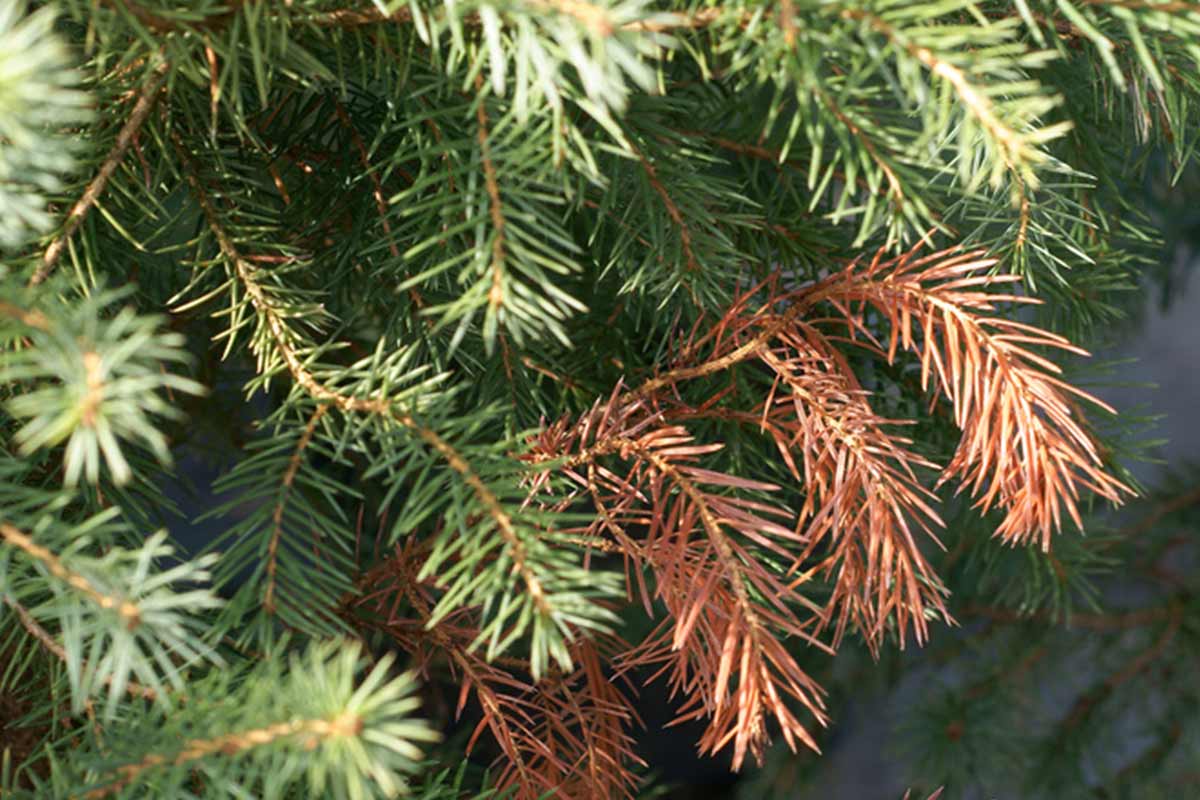
Get outside, look at your evergreens and keep your eyes peeled for browning. Evergreen trees naturally shed old needles as part of their growing cycle. When buds break and branches elongate, the interior foliage has done its job and will die off. Since trees have a finite amount of energy, they want to prioritize the needles that can get sunlight to complete photosynthesis. Typically, if your tree has brown needles on the interior, then that’s part of their natural growing cycle. To confirm that, check if the soil is moist to the touch and ensure there are no signs of an infestation or infection. If your tree passes those checkpoints, it’s likely OK.
On the flip side, if you see brown needles along the tree’s margin or exterior, then you need to investigate that more. It could be one of three things:
- Dry soil: Winter is tough on trees, but evergreens are especially vulnerable. Roots rely on water stored in tree needles once the ground freezes. The tree’s water stash can drain quickly, causing the needles to turn brown from dryness.
- Sunny days: Known as sun scald, needles in direct sunlight turn uniformly brown because of the extra water loss. You may also see dead or dried areas of bark.
- An infecting intruder: Evergreens attract a few common pests and diseases, like the pine beetle or cytospora canker disease. Browning needles can be a symptom of infection. If you suspect that, also look for small holes, sawdust or large cankers leaking white sap on branches.
What should our readers do to their trees now before the first snowfall of the season?
If you suspect a pest or disease, a local tree expert or arborist will need to deliver an advanced diagnosis and course of treatment. That will detail a timeline, which will differ from tree to tree. If you see something odd or worrisome, it’s best to have an expert come take a look as soon as you see it. Most reputable tree companies (including Davey) offer consultations for free. An arborist will help diagnose the problem and determine the best course of action.
For more home and gardening tips, subscribe to our weekly newsletter.